



Cytochrome P450
CYPs
Cytochrome p450 comprises a superfamily of heme-thiolate proteins named for the spectral absorbance peak of their carbon-monoxide-bound species at 450 nm. Having been found in every class of organism, including Archaea, the p450 superfamily is believed to have originated from an ancestral gene that existed over 3 billion years ago. Repeated gene duplications have subsequently given rise to one of the largest of multigene families. These enzymes are notable both for the diversity of reactions that they catalyze and the range of chemically dissimilar substrates upon which they act. Cytochrome p450s support the oxidative, peroxidative and reductive metabolism of such endogenous and xenobiotic substrates as environmental pollutants, agrochemicals, plant allelochemicals, steroids, prostaglandins and fatty acids. In humans, Cytochrome p450s are best known for their central role in phase I drug metabolism where they are of critical importance to two of the most significant problems in clinical pharmacology: drug interactions and interindividual variability in drug metabolism.
Cytochrome P450 Isoform Specific Products
-
Cytochrome P450
(671)
View all products
-
CYP1
(95)
View all products
-
CYP2
(141)
View all products
-
CYP3
(133)
View all products
-
CYP4
(12)
View all products
-
CYP11
(13)
View all products
-
CYP17
(18)
View all products
-
Aromatase/
CYP19A1 (62)View all products
-
CYP26
(6)
View all products
-
CYP51
(24)
View all products
-
CYP1A2
(10)
View all products
-
CYP2D6
(18)
View all products
-
CYP2C9
(18)
View all products
-
CYP2C19
(9)
View all products
-
CYP3A
(4)
View all products
-
CYP3A4
(29)
View all products
-
CYP17A1
(5)
View all products
All Product Categories
-
Cytochrome P450 Inhibitors
(776)
View all products
-
Cytochrome P450 Agonists
(7)
View all products
-
Cytochrome P450 Antagonists
(5)
View all products
-
Cytochrome P450 Activators
(99)
View all products
-
Cytochrome P450 Modulators
(31)
View all products
-
Cytochrome P450 p53 Activator
(1)
View all products
-
Cytochrome P450 Inducers
(33)
View all products
-
Cytochrome P450 Degraders
(2)
View all products
-
Cytochrome P450 Controls
(9)
View all products
-
Cytochrome P450 Substrates
(55)
View all products
-
Cytochrome P450 Ligands
(3)
View all products
-
Cytochrome P450 Related Products (1197)
Related Products (1197)

-
Antibodies (26)
-
Cytochrome P450 Isoform Comparison
-
Ticlopidine-d4
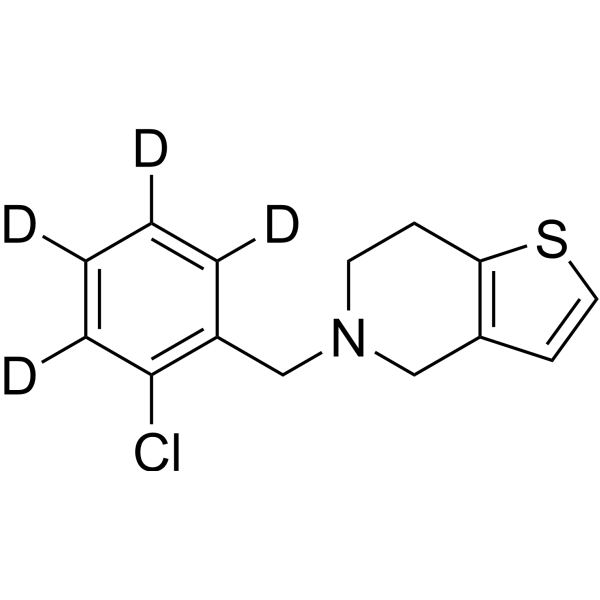 0 ImagesCat. No.: HY-100386SCAS No.: 1246817-49-1Synonyms: PCR 5332-d4Ticlopidine-d4 is the deuterium labeled Ticlopidine. Ticlopidine (PCR 5332), an antithrombotic proagent, acts as an allosteric, noncompetitive inhibitor of CD39 with the IC50 of 81.7 μM. Ticlopidine blocks several NTPDase isoenzymes with IC50s of 170 μM and 149 μM for NTPDase2 and NTPDase3, respectively. Ticlopidine is an inhibitor of CYP2C19 human liver cytochrome. Ticlopidine inhibits CYP2C9 and CYP3A4 with IC50s of 26.0 and 32.3 μM, respectively.
-
Cytochrome c-pigeon (88-104)
 0 ImagesCat. No.: HY-P1089CAS No.: 86579-06-8Synonyms: PCC 88-104Cytochrome c-pigeon (88-104) (PCC 88-104) has full stimulatory activity for pigeon cytochrome c-primed T cells from B10.A mice. The I-Ek-restricted T cell response to Cytochrome c pigeon (pcyt c) is specific for the COOH-terminal sequence 88-104.
-
Atovaquone-d5
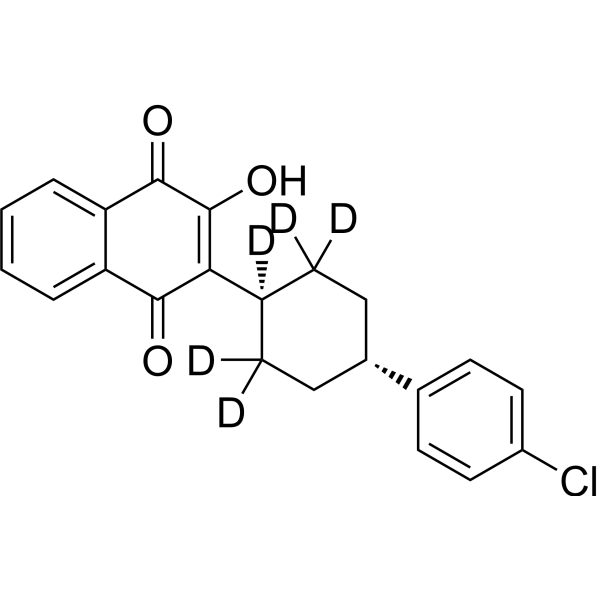 0 ImagesCat. No.: HY-13832S2CAS No.: 1329792-63-3Synonyms: Atavaquone-d5Atovaquone-d5 is the deuterium labeled Atovaquone. Atovaquone (Atavaquone) is a potent, selective and orally active inhibitor of the parasite’s mitochondrial cytochrome?bc1?complex. Atovaquone is against human and ?P. falciparum?cytochrome?bc1?activity with IC50 values of 460 nM and 2.0 nM, respectively. Atovaquone is an antimalarial agent and has the potential for the investigation of neumocystis pneumonia, toxoplasmosis, malaria, and babesia.
-
(Rac)-Tamsulosin-d3 hydrochloride
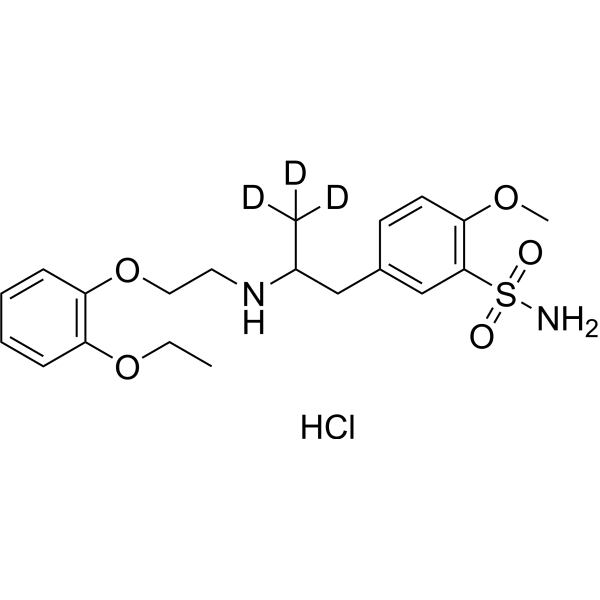 0 ImagesCat. No.: HY-B0661CSCAS No.: 1189923-88-3(Rac)-Tamsulosin-d3 hydrochloride is the deuterated-labeled Tamsolusin hydrochloride (HY-B0661C). Tamsolusin hydrochloride (YM12617 hydrochloride; LY253351 hydrochloride) is an isomer of Tamsulosin (HY-B0661). Tamsolusin hydrochloride is a sulfonamide phenethylamine derivative and a competitive antagonist of selective post-synaptic α1-adrenoceptors. Tamsolusin hydrochloride inhibits CYP3A4 activity in a non-competitive, enantiomer-specific manner, with an IC50 and Ki of 6.75 μM. Tamsolusin hydrochloride produces dose-dependent hypotension, preferentially antagonizing α1-adrenoceptor-mediated pressor responses, and inhibits α2-adrenoceptor-mediated pressor responses at high doses. Tamsolusin hydrochloride can be used in research related to various diseases such as metabolism.
-
Diosmetin-d3
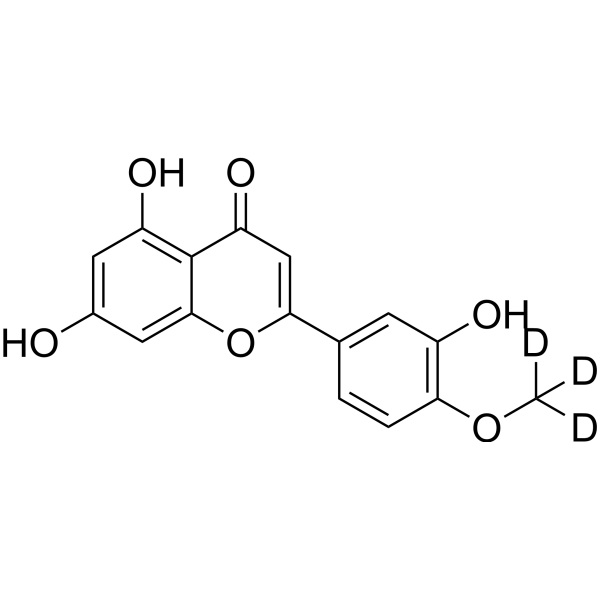 0 ImagesCat. No.: HY-N0125SCAS No.: 1189728-54-8Diosmetin-d3 is the deuterium labeled Diosmetin. Diosmetin is a natural flavonoid which inhibits human CYP1A enzyme activity with an IC50 of 40 μM in HepG2 cell.
-
CYP4A11/CYP4F2-IN-2
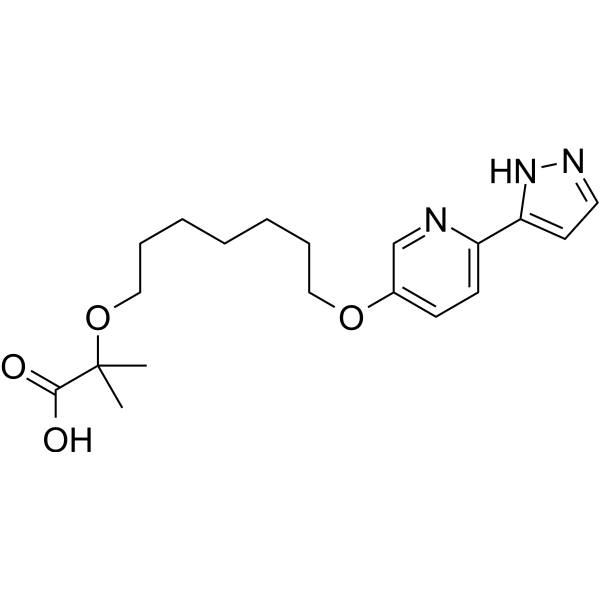 0 ImagesCat. No.: HY-149770CAS No.: 2280834-99-1CYP4A11/CYP4F2-IN-2 (compound 15) is an orally available inhibitor of CYP4A11/4F2 with IC50s of 120 nM and 220 nM, respectively. CYP4A11/CYP4F2-IN-2 inhibits 20-HETE production in rat kidney and has potential inhibitory effects on diabetic nephropathy and autosomal dominant polycystic kidney disease.
-
Human CYP2C19, Reductase+b5
 0 ImagesCat. No.: HY-E72099Human CYP2C19, Reductase+b5 is a near-physiological recombinant microsomal system co-expressed in insect cells, consisting of human cytochrome P450 2C19, NADPH-P450 oxidoreductase (CPR) and cytochrome b5. Human CYP2C19 is a human cytochrome P450 subtype belonging to the CYP2 family, as well as a major metabolic enzyme. It is predominantly expressed in the human liver and metabolizes various psychoactive compounds.
-
Aspergillusidone D
 0 ImagesCat. No.: HY-N16402CAS No.: 1454585-77-3Aspergillusidone D (Compound 1), a brominated depsidone, is a Aromatase inhibitor with an IC50 of 0.8 μM. Aspergillusidone D can be isolated from fungus Aspergillus unguis cultured in KBr medium. Aspergillusidone D has potent cytotoxicity against cancers cells, such as MOLT-3 cells. Aspergillusidone D can be used for cancers like breast cancer research.
-
Saccharolactone
 0 ImagesSaccharolactone is a potent orally active β-glucuronidase inhibitor. Saccharolactone markedly lowers biliary endogenous β-glucuronidase activity in the rat bile. Saccharolactone can stabilize glucuronide metabolites in vitro. Saccharolactone is also a strong inhibitor of CYP1A2, 2D6, 3A4 and 2C8 isoforms (IC50 < 4 mM).
-
(±)5(6)-EET Ethanolamide
 0 ImagesCat. No.: HY-172568(±)5(6)-EET Ethanolamide is a metabolite of Anandamide (HY-10863) generated via oxidation by cytochrome P450 enzymes. (±)5(6)-EET Ethanolamide is also a selective cannabinoid receptor 2 (CB2) agonist. (±)5(6)-EET Ethanolamide has Ki values of 11.4 μM and 8.9 nM for human CB1 and CB2, respectively . (±)5(6)-EET Ethanolamide can be used in research on immunomodulation and neuroinflammation.
-
CYP3A4-IN-2
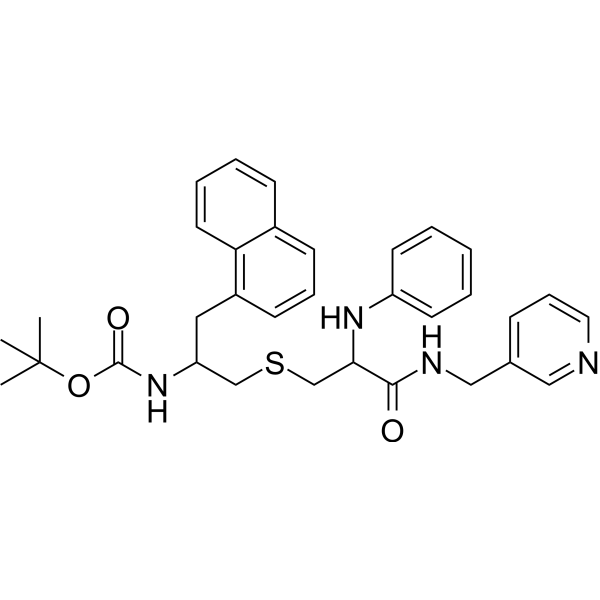 0 ImagesCat. No.: HY-150580CAS No.: 2562383-94-0CYP3A4-IN-2 is a specific inhibitor of cytochrome P450 3A4 (CYP3A4) with the IC50 value of 0.055 μM. CYP3A4-IN-2 is a ritonavir analogue with increased hydrophobicity of the R2 side group and stronger inhibitory effect compared to ritonavir. CYP3A4-IN-2 can be used as an antiviral agent and immunosuppressants.
-
Phillyrin (Standard)
 0 ImagesPhillyrin (Standard) is the analytical standard of Phillyrin. This product is intended for research and analytical applications. Phillyrin is isolated from Forsythia suspensa Vahl (Oleaceae), has antibacterial and anti-inflammatory activities. Phillyrin has potential inductive effects on rat CYP1A2 and CYP2D1 activities, without affecting CYP2C11 and CYP3A1/2 activities. Phillyrin has anti-influenza A virus activities.
-
Tebuconazole-d9
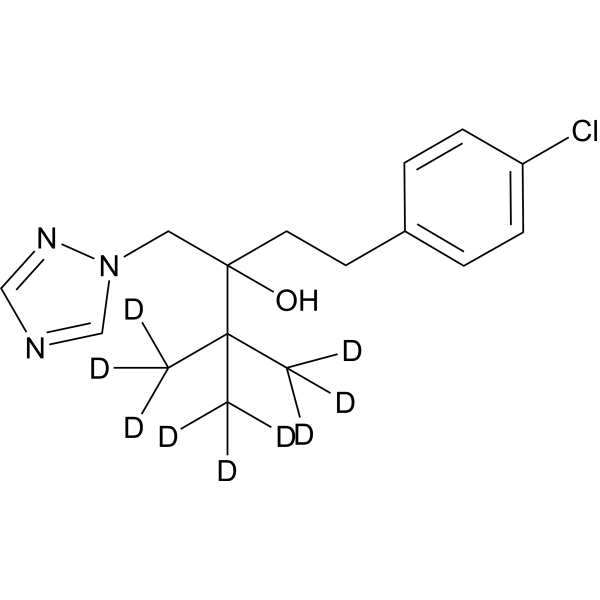 0 ImagesCat. No.: HY-B0852SCAS No.: 1246818-83-6
-
Clopidogrel (hydrogen sulfate) (Standard)
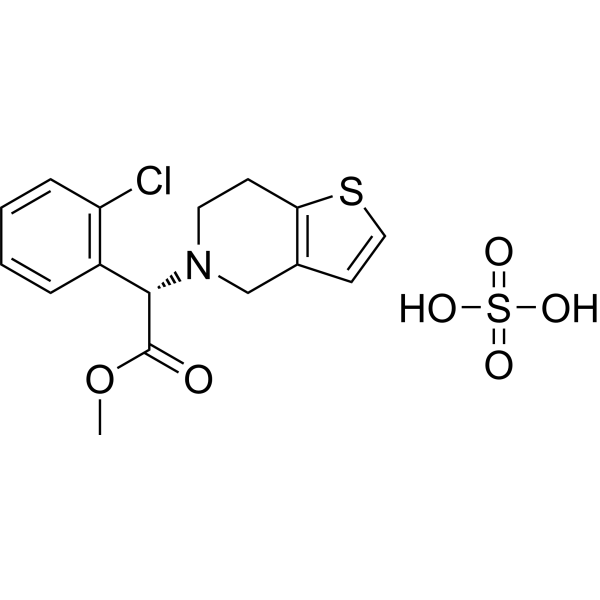 0 ImagesSynonyms: (S)-(+)-Clopidogrel bisulfate (Standard); (S)-(+)-Clopidogrel hydrogen sulfate (Standard)Clopidogrel (hydrogen sulfate) (Standard) is the analytical standard of Clopidogrel (hydrogen sulfate). This product is intended for research and analytical applications. Clopidogrel hydrogen sulfate is an antiplatelet agent to prevent blood clots. Clopidogrel hydrogen sulfate inhibits CYP2B6 and CYP2C19 with IC50s of 18.2 nM and 524 nM, respectively. Clopidogrel hydrogen sulfate is a potent antithrombotic agent that inhibits ADP-induced platelet aggregation.Clopidogrel hydrogen sulfate also is an orally active P2Y(12) inhibitor.
-
ZSTK3744
 0 ImagesCat. No.: HY-181629APurity: 98.23%ZSTK3744 is an aryl hydrocarbon receptor (AhR) agonist. ZSTK3744 directly binds to AhR, upregulates the expression of AhR target genes including CYP1A1, CYP1B1 and TIPARP, and mediates cell growth inhibitory activity in triple-negative breast cancer cells. ZSTK3744 induces apoptosis in triple-negative breast cancer cells. ZSTK3744 exhibits anti-tumor activity and can be used in the research of chemoresistant triple-negative breast cancer.
-
7-Ethoxycoumarin-d5
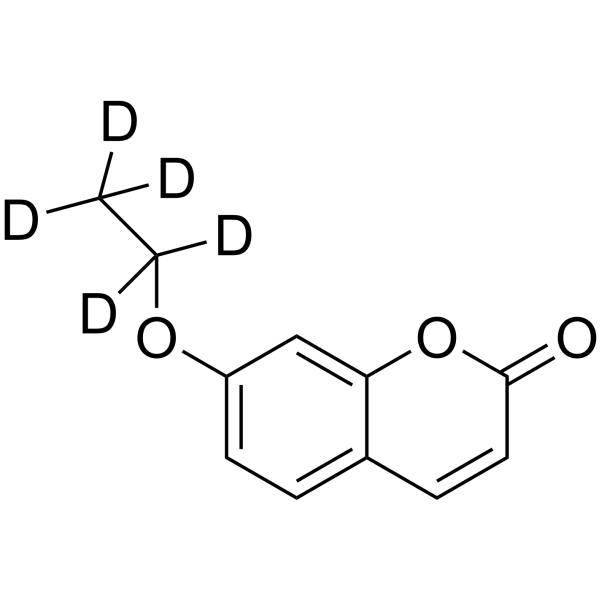 0 ImagesCat. No.: HY-133091SCAS No.: 1189956-39-57-Ethoxycoumarin-d5 is deuterium labeled 7-Ethoxycoumarin. 7-Ethoxycoumarin is a substrate for cytochrome P450(CYP450) and has been used in the functional characterization of various CYPs.
-
CYP11B1-IN-2
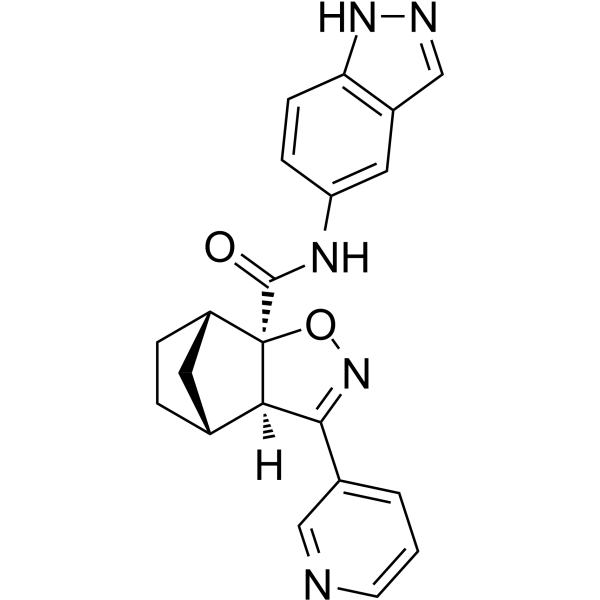 0 ImagesCat. No.: HY-151140CAS No.: 3031098-46-8CYP11B1-IN-2 (compound 7aa) is an orally active, potent and selective CYP11B1 inhibitor, with IC50 values of 9 nM and 25 nM for human CYP11B1 and rat CYP11B1, respectively. CYP11B1-IN-2 can be used for the research of diseases caused by excessive cortisol.
-
(-)-Vorozole
 0 ImagesCat. No.: HY-167737CAS No.: 132042-69-4(-)-Vorozole is an orally active non-steroidal aromatase inhibitor with potent and selective properties. (-)-Vorozole demonstrates antitumor activity in in vivo experiments. (-)-Vorozole is utilized in the study of breast cancer.
-
CYP1A1-IN-2
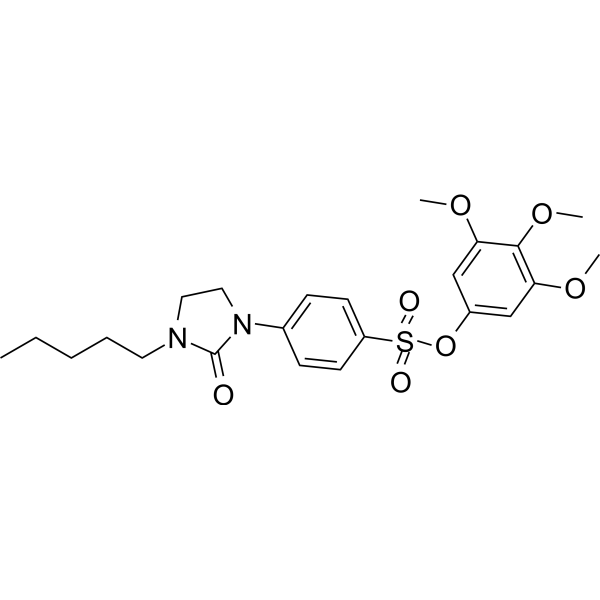 0 ImagesCat. No.: HY-148595CAS No.: 1422527-87-4CYP1A1-IN-2 (Compound 14) is a competitive inhibitor of CYP1A1 (Ki: 1.4 μM). CYP1A1-IN-2 exhibits potent antimitotic activity and arrests cell in the G2/M phase. CYP1A1-IN-2 disrupts the microtubule and the cytoskeleton in CYP1A1-expressing breast cancer cells.
-
CP-506
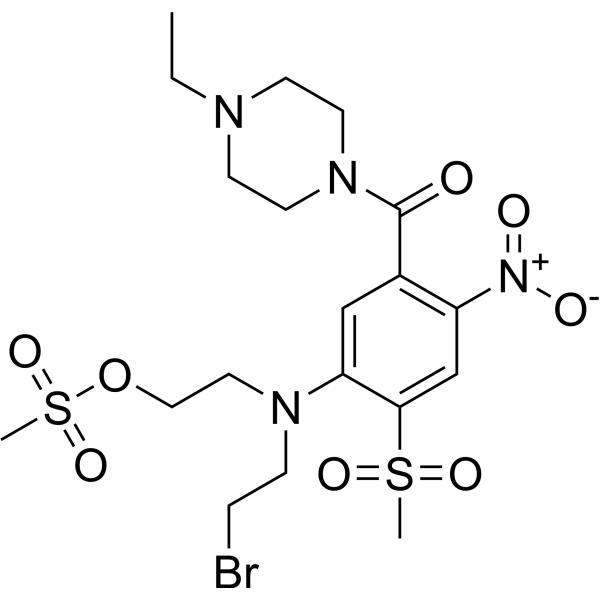 0 ImagesCat. No.: HY-149769CAS No.: 2227303-52-6CP-506 (compound 26) is an anticancer compound and a substrate for nitroreductase and CYP oxidoreductases. CP-506 has anticancer activity.




